
How to Safely Replace an Aquarium Filter
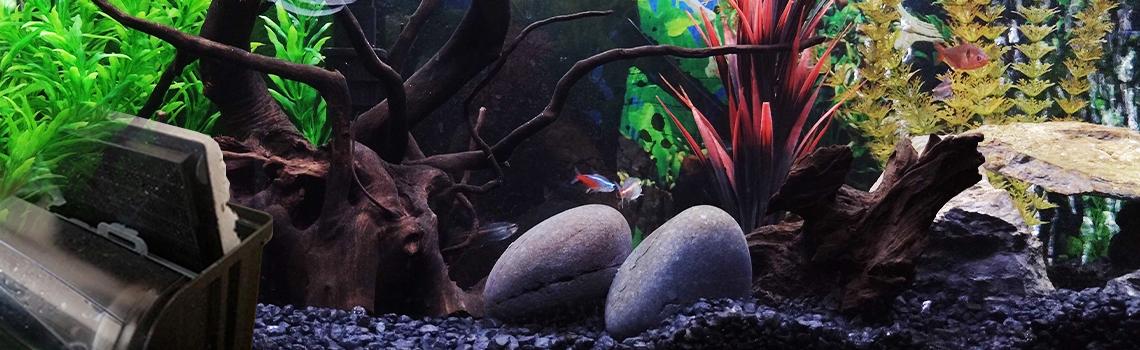
Despite our best efforts to maintain equipment, it inevitably needs to be replaced from time to time, including filters. Even if the filter is still in prime condition, sometimes you just want to upgrade to a newer model. Replacing a filter is not difficult but it can be disruptive to the biology crucial to keeping your aquarium healthy. Although good nitrifying bacteria live throughout your aquarium, the population is concentrated in the bio media in your filter.
If you disturb your bacteria population, you can cause New Tank Syndrome (NTS), which is marked by a cloudy aquarium and dangerously high ammonia. Here, we’ll go over the best practices for installing a new filter to maintain a stable aquarium and avoid NTS.
Regardless of how you transition between filters, you should not do a water change at the same time to avoid removing too much bacteria. Instead, do a slightly larger water change the week before (no more than 30%) and feed sparingly to keep the waste low. Hang on to your bio media if you can and do not wash it so that you can preserve the bacteria colonies from your old filter.
Run them together
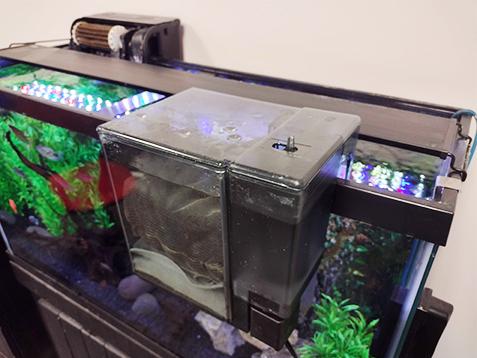
The simplest solution to preserve the bacteria in your filter media is to install and run the new filter while continuing to run your old filter. Bacteria will inevitably be carried through the water column from the old filter, seeding the new one. After a week or two, the new filter will be fully established and you can remove the old one without much trouble. Of course, that requires that your old filter is able to continue running. Hopefully you are able to upgrade your filter before it stops working.
Switch the media
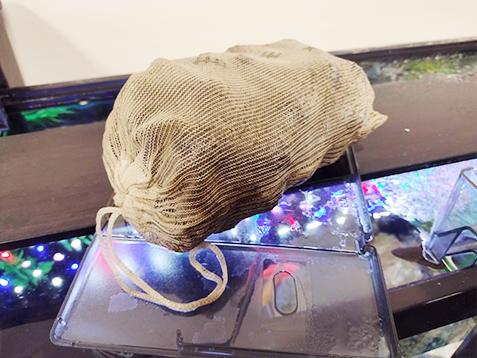
The most important media to save is the bio media - typically ceramic disks, bio sponge, or bio-balls. Some simple filters use the filter floss or pads as the media. If the bio-media from your old filter is similar to your new filter, you can simply add the old media to the new filter and be done with it. If space is limited, you can temporarily make room by removing the carbon until the good bacteria colonize the new media in a few weeks. After that, you can remove the old media and replace the carbon.
Set the media in the aquarium
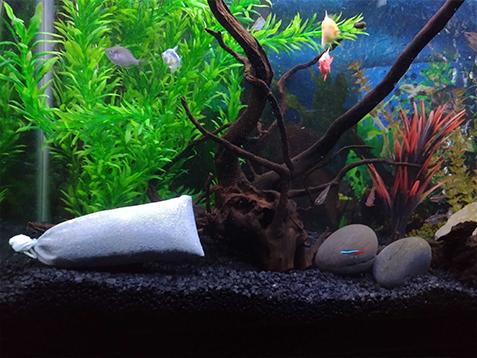
If there’s no room in your new filter for old media or you need to keep the carbon in the filter, you can place the old filter media directly in the tank. This does assume that your media is well contained in a media bag, filter floss, or bio sponge so it won’t spill around the tank. This method is most effective if you place the media in areas of high flow, typically near the inlet or outlet of the new filter.
New tank syndrome
This is possible no matter which method you use, so stay vigilant. Monitor your fishes’ behavior for signs of stress. That’s a good rule any time you make big changes to your aquarium! When you do make changes, do only one at a time so your aquarium has time to settle.
Replace Entirely
You may find yourself needing to replace your filter and everything in it despite all effort to avoid this. When this happens, take great care to preserve the bacteria still living in your aquarium, mostly in the gravel. Add a dose of bacteria starter to the aquarium to really encourage rapid bacteria growth. Watch ammonia levels closely and if they start to rise, do a water change without vacuuming the gravel. Feed sparingly and vacuum lightly for a couple weeks until the filter is properly established.

Follow us for more tips and ideas to create exceptionally beautiful, healthy aquariums!